


Price Elasticity and Discount Depth: A Summary
Price elasticity analysis is the essential tool for optimizing retail discounts, measuring how sensitive customers are to changes in product prices, which allows businesses to move beyond guesswork to precision pricing. By quantifying this sensitivity through discount curves and lift modeling—and contextualizing it by customer segment and seasonality—retailers can determine the “optimal discount depth” that maximizes sales volume while minimizing margin erosion. Leveraging real-time platform data and digital shelf analytics is key to ensuring every promotional markdown optimization drives profitable lift and remains competitive, ultimately translating strategic discounting into a significant competitive and financial advantage.
Why Your Discounts Might Be Costing You: The Secret Power of Price Elasticity
Have you ever run a promotion and felt like you were just guessing? You slash the price, watch the sales volume jump, and then cross your fingers hoping the increased traffic and volume make up for the lower margins. It’s a common scenario in retail and e-commerce, but it’s not a sustainable strategy. The truth is, blindly offering discounts is one of the fastest ways to erode profitability and condition your customers to never buy at full price. To move beyond guesswork and start making smarter, more profitable decisions, you need to understand one fundamental concept: price elasticity.
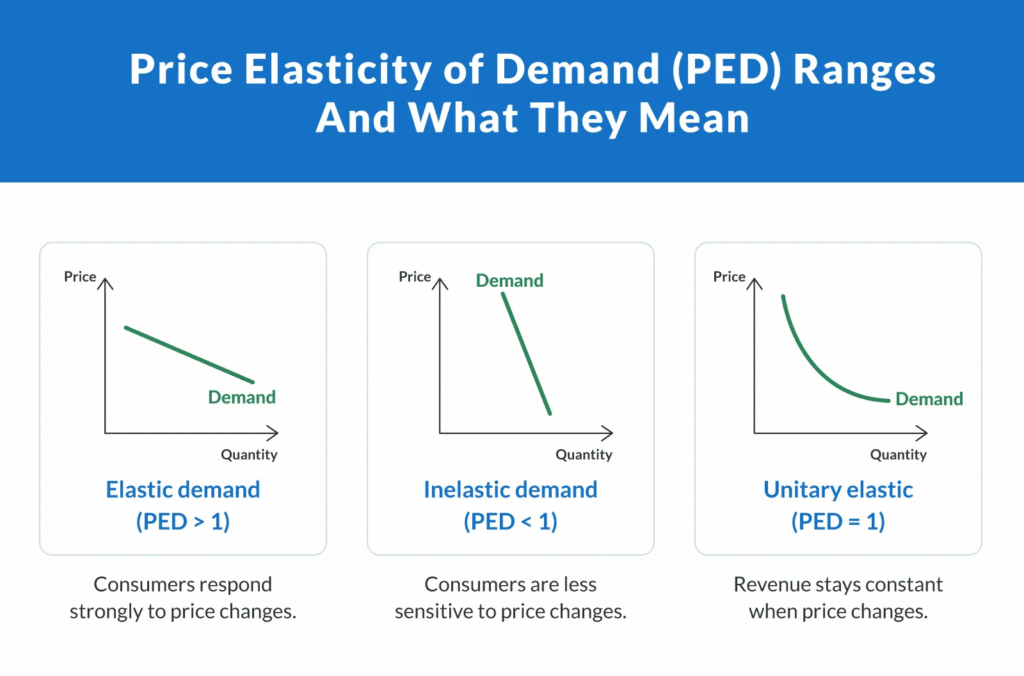
Image Source: Clarify Capital
Simply put, price elasticity measures how sensitive your customers are to changes in your product prices. Think of it as the ultimate diagnostic tool for your discount strategy. If a small drop in price leads to a massive surge in sales, your product is highly elastic. If a big price cut barely moves the needle, your product is inelastic. Understanding this relationship is the key to mastering promo effectiveness and making sure every discount you offer drives genuine, profitable lift, not just revenue vanity.
This isn’t about eliminating discounts; it’s about optimizing them. It’s about finding that sweet spot—the optimal discount depth—where you maximize sales volume without unnecessarily sacrificing margin. By leveraging modern tools and deep price elasticity analysis, businesses can move from blunt discounting to surgical precision. This detailed approach is especially vital when navigating the complex landscape of marketplace discounts where competitive pressures are intense.
See how price elasticity analysis helps you measure customer sensitivity, optimize discount depth, and run profitable promotions that maximize sales volume while protecting your margins. Learn more about
What Is Price Elasticity Analysis? (And How It Works in Retail)
Price elasticity analysis is the disciplined process of quantifying the link between a change in a product’s price and the resulting change in the quantity demanded. It’s a fundamental economic principle applied to the practical world of retail strategy. When we talk about optimizing discount depth, we are inherently talking about elasticity.
The formula for the coefficient of price elasticity of demand is quite simple at its core: the percentage change in quantity demanded divided by the percentage change in product prices. However, applying this formula in the real world is far more complex than just looking at last week’s sales data. Why? Because customer demand forecasting is influenced by countless other factors, like the weather, competitor actions, advertising campaigns, and seasonality. A rigorous analysis must isolate the price effect from all these other variables.
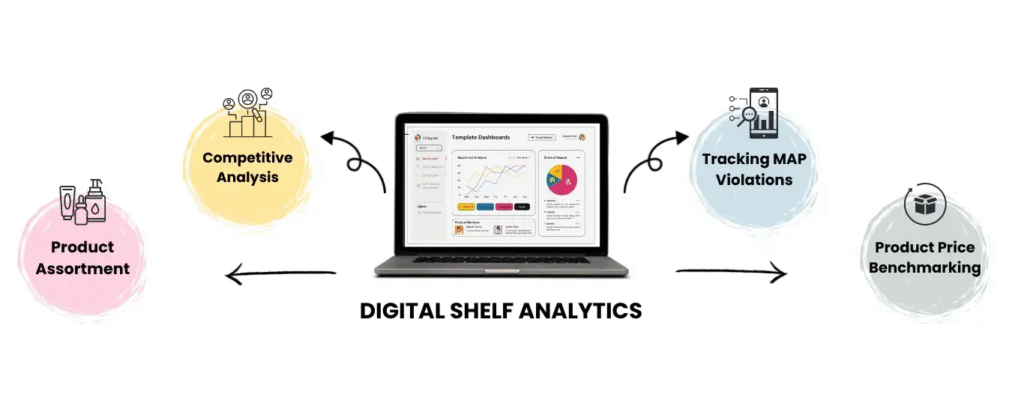
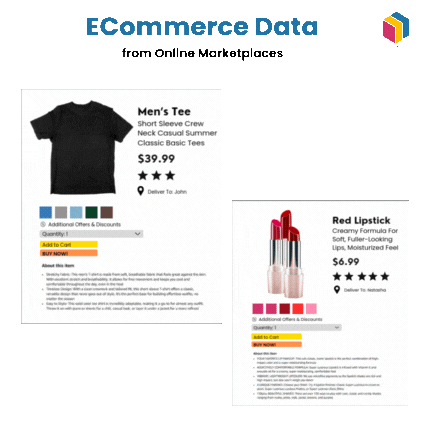
This is where advanced data modeling and digital shelf analytics come into play. Modern e-commerce platforms and retail systems generate massive amounts of platform data, which, when analyzed correctly, can reveal hidden patterns of customer behavior. For instance, you might find that for a specific type of electronics, a 10% discount yields a 30% increase in sales (elastic), while for a niche accessory, a 10% discount only yields a 5% increase (inelastic). This information is the bedrock of strategic pricing.
The goal of this comprehensive price elasticity analysis is not just to calculate a single number for every product; it’s to create dynamic models that reflect the reality of shopping behavior across different circumstances. We need to move past simple averages and look at the nuances of demand.
How to Measure Price Elasticity by Customer Segment and Season
One of the biggest mistakes retailers make is assuming a product’s price elasticity is static. A coffee maker might be highly elastic the week before Black Friday, but almost entirely inelastic in the middle of July. Furthermore, different customer segments will react to the same price drop in completely different ways. Therefore, true mastery of promo effectiveness requires measuring elasticity across a two-dimensional matrix: segment and season.
1. Segment-Specific Elasticity
Not all customers are created equal, and their sensitivity to product prices varies dramatically. A robust price elasticity analysis should always break down elasticity by key customer segments:
- Loyal Customers: These buyers have a high affinity for your brand. They are often less sensitive to price changes (inelastic) but respond well to value-added perks like early access or free shipping. For this group, discount depth can often be lower, preserving margin.
- Price-Sensitive Shoppers (The “Deal Hunters”): This segment primarily buys on promotion. They are highly elastic, meaning they require a significant discount depth to trigger a purchase. They are excellent targets for clearing inventory or driving volume, but managing the discounts for them is key to avoid margin bleed.
- New Customers: These buyers are often testing your brand. Their elasticity can be high because they are comparing your price against competitors. Strategic marketplace discounts can be effective here to acquire them, but the promotion must be attractive enough to outweigh the risk of trying a new brand.
Understanding these segment-level differences allows you to tailor your promotions—offering deep marketplace discounts to price hunters and smaller, targeted perks to your loyal base. This targeted approach is far more profitable than a blanket discount strategy.
2. Seasonal and Event-Based Elasticity
The calendar dramatically affects customer willingness to pay. A product’s elasticity shifts based on time of year, holidays, and promotional cycles.
- Peak Season/Holidays: During high-traffic events like Christmas, Back-to-School, or Singles’ Day, overall demand is high. While competitors are also discounting, the sheer volume means customers may be slightly less sensitive to the depth of the discount on must-have items. Your price elasticity analysis during this time should focus on competitive positioning to capture share.
- Off-Season/Clearance: When a product is going out of season or is part of clearance inventory, its elasticity typically increases. Customers need a greater incentive—a deeper discount depth—to purchase an item they don’t immediately need. This is a critical time to deploy highly elastic pricing to manage inventory effectively.
- Pre- and Post-Promo Periods: The effectiveness of a promotion is often measured by the “lift” it creates, but a critical part of the analysis involves understanding the “post-promo dip.” If customers are highly elastic, they may aggressively stock up during the sale, leading to a period of artificially low demand afterward. A thorough price elasticity analysis incorporates this halo and cannibalization effect.
Discount Curves and Lift Modeling: The Tools Behind Optimal Pricing
To move from theoretical understanding to practical application, retailers use powerful tools known as discount curves and lift modeling. These are the analytical engines that translate your platform data and ecommerce insights into actionable strategies for discount depth.
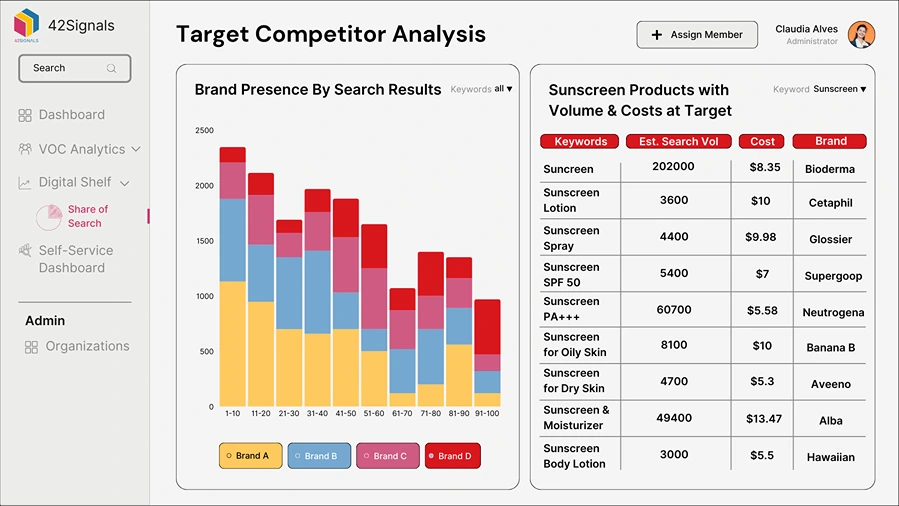
Image Source: Target Data by 42Signals
The Power of Discount Curves
A discount curve (or demand curve) is a visualization of the relationship between the discount percentage and the resulting sales volume or unit lift. It’s the graphical representation of price elasticity.
A typical discount curve is not a straight line. For example, the incremental lift from a 10% discount to a 15% discount might be significant, but the lift from a 40% discount to a 45% discount might be negligible. This non-linear relationship is exactly why optimizing discount depth is so crucial. A well-constructed discount curve for a specific product and segment allows you to instantly answer the most important question in promotional planning: What is the minimum discount I need to offer to achieve my sales goal?
If you are aiming for a 50% increase in unit sales (lift), the curve will point you directly to the required discount depth—say, 22%. Offering 25% would be a needless margin sacrifice, while 20% would likely miss the target. This level of precision elevates promo effectiveness from a cost center to a strategic profit driver.
Lift Modeling for Predictive Accuracy
Lift modeling takes the concept of the discount curve and integrates all the other variables—season, segment, marketing spend, and competitor pricing—to create a predictive forecast. This advanced form of price elasticity analysis predicts the specific increase in sales volume (the “lift”) that will occur from a planned promotion.
The model uses historical data and machine learning to distinguish true promotional lift from baseline sales. This is critical for assessing true promo effectiveness. If your baseline weekly sales are 1,000 units, and a 20% discount results in 1,500 units, the “lift” is 500 units. A robust lift model helps you forecast this 500-unit lift before you execute the promotion, ensuring that the expected profit from the 500 incremental sales exceeds the margin cost of the 1,000 baseline sales sold at a discount.
How Platform Data and Ecommerce Analytics Power Price Elasticity Models
In the digital era, the ability to conduct sophisticated price elasticity analysis is entirely reliant on the quality and accessibility of your data. The vast amount of platform data generated by e-commerce transactions, website clicks, and abandoned carts is the lifeblood of accurate pricing.
Leveraging Digital Shelf Analytics
Digital shelf analytics are no longer a luxury; they are a necessity for any retailer aiming to master promo effectiveness. These tools constantly monitor competitors’ product prices, their marketplace discounts, and their inventory levels.
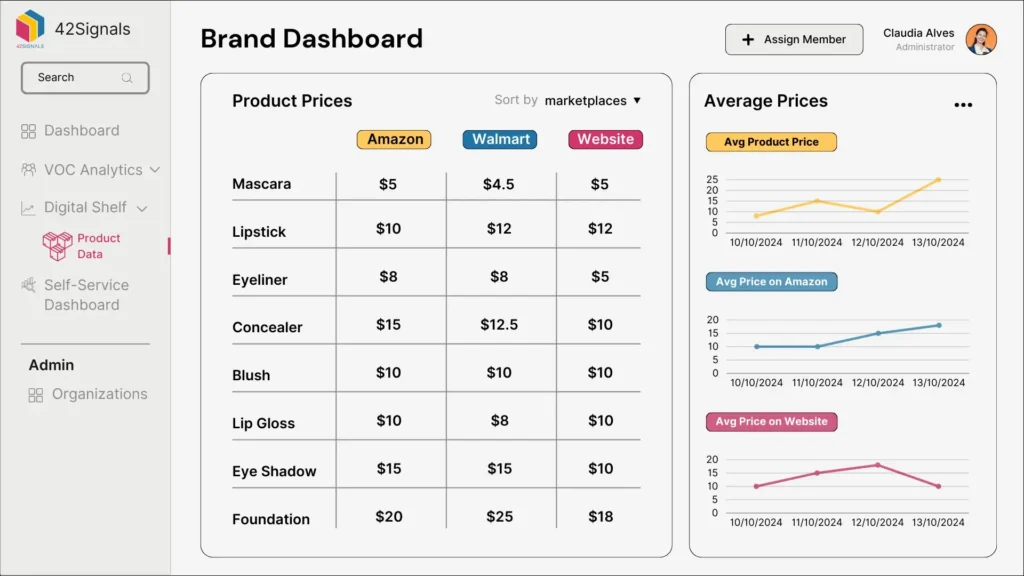
Imagine your competitors start offering a 20% discount on a similar product. If your product is highly elastic, your model needs to immediately recognize this competitive action and recommend a specific counter-discount depth (perhaps 22% to maintain a differential advantage). Without real-time competitive insights from digital shelf analytics, you are reacting too slowly and potentially losing massive market share, especially in categories sensitive to price.
Incorporating Ecommerce Insights
Beyond competitive intelligence, internal ecommerce insights—such as conversion rates, cart abandonment rates at different price points, and even customer review sentiment—provide crucial context for your price elasticity analysis. A product with low elasticity might, surprisingly, become more elastic if the promotion is combined with a key trust signal, like a “Highly Rated” badge, suggesting that the customer’s perceived risk has been lowered. This demonstrates that elasticity isn’t just about the number; it’s about the entire shopping experience.
This meticulous approach ensures that your calculated elasticity is based on a holistic view of the market and customer behavior, making your optimal discount depth both competitive and profitable.
Setting the Optimal Discount Depth: The Profit-Maximizing Formula
The ultimate goal of using price elasticity analysis is to determine the optimal discount depth—the point at which marginal revenue from the discount equals the marginal cost.
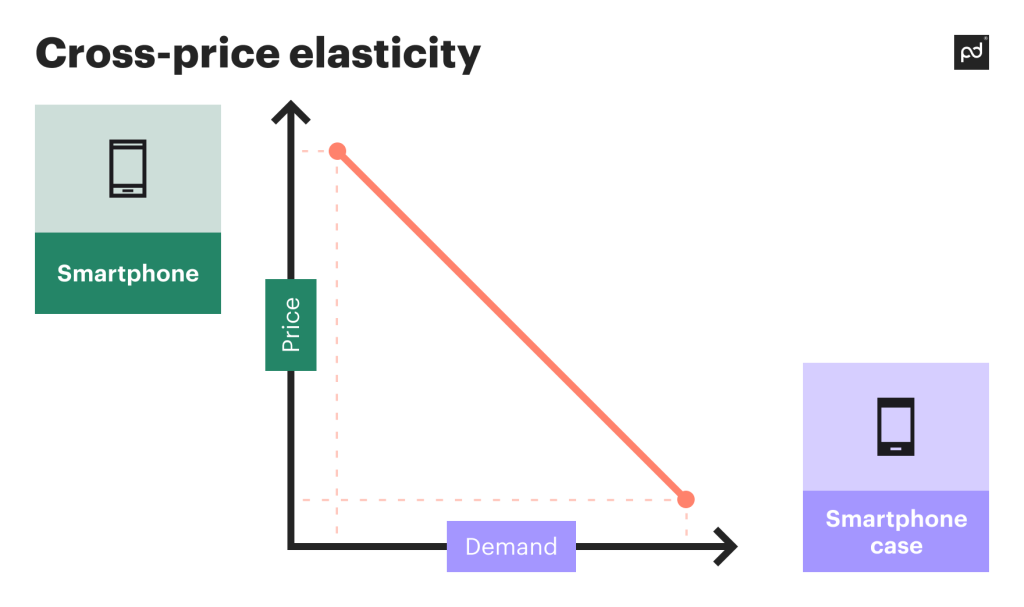
Image Source: Panda Doc
Avoiding Margin Erosion
A common pitfall is over-discounting. When a product is relatively inelastic (meaning customers will buy it anyway), offering a deep discount is simply sacrificing margin unnecessarily. For instance, if your price elasticity analysis shows that a 5% discount generates the same unit lift as a 10% discount, offering 10% is a 5% margin mistake. Conversely, if a product is highly elastic, being too conservative with the discount (e.g., offering 10% when 20% is needed) results in lost sales volume that could have offset the margin reduction.
Practical Application: A Step-by-Step Approach
- Calculate Baseline Elasticity: Use historical platform data to calculate the initial price elasticity coefficient for a given product or category.
- Segment and Contextualize: Refine the elasticity coefficient based on the target customer segment and the planned season/event. This generates the appropriate discount curves.
- Set the Goal: Determine the promotional objective: Is it maximizing profit, maximizing volume/market share, or clearing inventory?
- Use Lift Modeling: Apply lift modeling to the segmented discount curves to find the exact discount depth that achieves the goal. If the goal is profit maximization, the model calculates the point where the increase in total gross profit (from new sales) peaks before the margin loss from baseline sales becomes too significant.
- Monitor and Adjust: Use digital shelf analytics to monitor competitor reactions and customer responses in real-time. Be prepared to dynamically adjust the discount depth based on the actual, observed elasticity during the promotion.
Data in Action: Evidence of Effective Price Elasticity
The impact of robust price elasticity analysis is not theoretical; it drives measurable improvements in the bottom line. For example, a major retailer found that by moving from a blanket 20% off promotion to a segmented discount strategy based on price elasticity (offering 10% to loyal customers, 25% to price hunters), they maintained the same overall sales volume while improving gross margin by 4.5 percentage points.
Another study, highlighted by industry analysis, noted that companies that actively use ecommerce insights and predictive lift modelling in their promotional pricing strategy generally see revenue increases of 2% to 7% without corresponding increases in costs. This confirms that precision in setting product prices and marketplace discounts is a significant competitive advantage.
Source: While specific company data is confidential, reports from firms like McKinsey and major pricing consulting groups frequently cite margin improvements in the 3-5% range for retailers implementing advanced pricing optimization like price elasticity modeling.
The future of profitable retail depends on moving beyond simple percentage-off sales. It relies on the sophisticated, data-driven approach of price elasticity analysis to determine the precise, profit-maximizing discount depth for every product, for every customer, in every season.
Ready to stop guessing on discount depth? 42Signals gives you real-time price elasticity data and competitor intelligence to run promotions that actually grow margin
Frequently Asked Questions
What is price benchmarking?
Price benchmarking analytics is the process of comparing your product prices against relevant market reference points, usually competitors, marketplaces, regions, or historical norms, to understand where you are overpriced, underpriced, or misaligned. The goal is not “match everyone,” it is to decide where you should be premium, where you must be within a tight band, and where you can win on margin because the market is less elastic. Good benchmarking also accounts for like-for-like matching (same SKU or equivalent), pack sizes, shipping, taxes, discounts, and promo mechanics so you do not compare apples to oranges.
What is price elasticity of demand?
Price elasticity of demand measures how sensitive demand is to a change in price. If a small price change causes a big swing in units sold, demand is elastic. If demand barely moves when price changes, it is inelastic. It is typically expressed as the percentage change in quantity demanded divided by the percentage change in price, over a specific time period, segment, and context.
How do you calculate optimal discount depth?
“Optimal” discount depth is the discount level that maximizes your objective, usually profit contribution, not just revenue. The clean way to calculate it is to test multiple discount levels (or use historical variation) and choose the one where incremental profit peaks.
A practical approach:
Define your objective: maximize gross profit, contribution margin, revenue, or units. Profit is usually the right objective if inventory is not perishable and you are not in a clearance window.
Estimate baseline demand at full price: expected units without a discount for the same period.
Estimate uplift by discount level: how many incremental units each discount level adds versus baseline. This comes from experiments, controlled comparisons, or modeled elasticity.
Compute profit at each discount depth: Profit = (Net price after discount − unit variable cost) × expected units − discount costs (plus any promo fees).
Select the discount depth with the highest profit, while checking constraints:
Minimum margin floor
Inventory available and replenishment lead time
Cannibalization of other SKUs
Post-promo demand dip and return rate impact
If you do not have clean experiments, start with two or three discount tiers (for example, 10%, 20%, 30%) and run them across comparable stores or weeks. Then refine.
What is the difference between elastic and inelastic demand?
Elastic demand means customers react strongly to price changes: raise price and volume drops meaningfully, lower price and volume lifts meaningfully. This often happens when there are close substitutes, low switching costs, and the product is not essential.
Inelastic demand means customers react weakly to price changes: you can raise or lower price and volume barely moves. This is common for essentials, strongly differentiated products, and cases where the buyer has limited alternatives or the price is a small share of their total budget.
How does seasonality affect price elasticity?
Seasonality changes elasticity because the buyer’s urgency and available substitutes change across the calendar.
Common patterns:
During peak season or high-urgency periods, demand often becomes less price-sensitive because customers need the item now. Price increases may hurt volume less than usual.
During off-season, demand often becomes more price-sensitive because the purchase is discretionary. Discounts can drive larger incremental volume.
Holidays and events can create “temporary inelasticity” for specific items, while making adjacent categories more elastic due to heavy promotions and comparison shopping.
The key operational point: elasticity is not a fixed SKU attribute. It is conditional on timing, competition, inventory availability, and customer intent.